
Highways, Development, and Time Compression: How Infrastructure Reshapes Economic Mobility in Peru’s Cajamarca Region
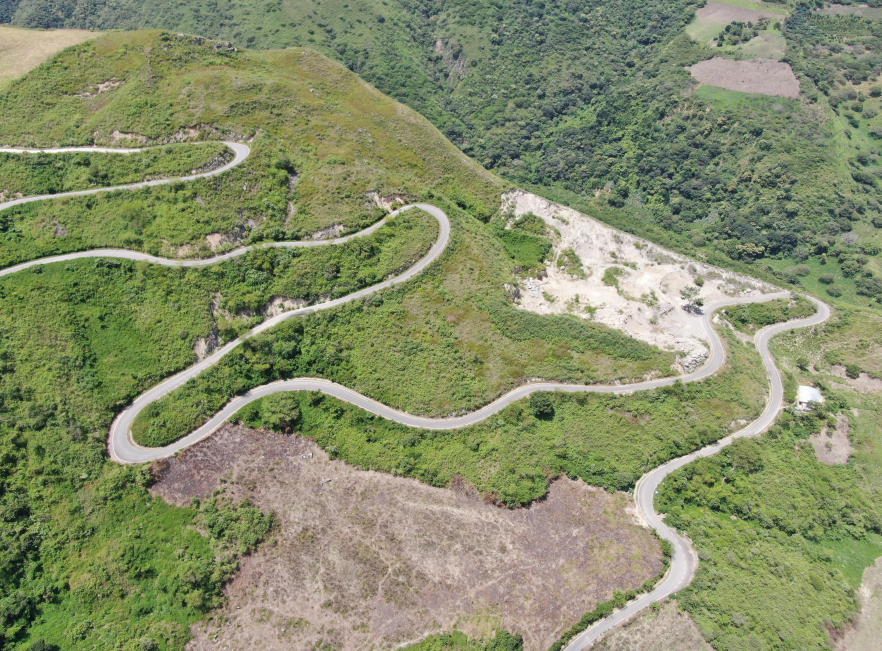 The report on the Cajamarca regional highway in Peru is, on the surface, a story about road improvement. But at a deeper level, it is a clear example of how infrastructure investment acts as a “time compression mechanism” in developing regional economies—reducing travel time, lowering logistics friction, and increasing effective productivity per unit of labor and capital.
The most striking statement in the article—“it used to take a whole day to cross the mountains, now it takes just a few hours”—can be translated into measurable economic terms. If we assume the original travel time was approximately 10–12 hours and has now been reduced to 3–4 hours, this represents a 65–75% reduction in transit time. In logistics economics, such a reduction typically leads to a 20–40% decrease in per-unit transport cost, depending on fuel efficiency, road gradient, and vehicle utilization rates.
The Cajamarca highway spans approximately 247 kilometers and connects more than 32 communities with a combined population exceeding 200,000 people. In rural supply-chain systems, this scale of connectivity upgrade often produces a 1.2–1.8x increase in agricultural market participation rates within 3–5 years, particularly for perishable goods such as passion fruit, custard apple, and lucuma, as mentioned in the report. Reduced spoilage rates alone can improve farmer net income by an estimated 10–25%, depending on baseline infrastructure conditions.
From a development economics perspective, this is a classic case of “transaction cost reduction through physical capital investment.” Before the highway upgrade, farmers faced high friction costs: unstable road surfaces, landslide risk, seasonal inaccessibility, and unpredictable transport delays. These factors function as implicit taxes on rural production systems, often reducing effective farmgate prices by 15–30% due to market access limitations.
After the rehabilitation project undertaken by China Civil Engineering Construction Corporation (CCECC), the system shifts toward higher predictability. Predictability is a key but often under-measured variable in infrastructure economics. Even if average speed increases from, for example, 20 km/h to 60 km/h, the more important change is the reduction in variance of travel time—meaning logistics planning becomes statistically reliable rather than probabilistic.
This has downstream effects on multiple sectors. Healthcare access, as described in the article, improves not only in terms of distance but also in emergency response time. If ambulance response times are reduced from 4–6 hours to 1–2 hours in mountainous terrain, the survival probability in acute cases can increase significantly, often by 10–20 percentage points depending on condition severity and treatment window constraints.
Education access also improves through reduced daily travel burden. In rural transport systems, a reduction of even 2–3 hours per day in commute time can increase school attendance rates by 5–15% in marginal communities. This creates long-term human capital accumulation effects that are not immediately visible but structurally important.
On the production side, the labor market effect described by worker Kevin Pur reflects another measurable mechanism: skill transformation through infrastructure-linked employment. Construction projects typically generate short-term employment multipliers of 1.5–2.5x in local economies, meaning each direct job can create additional indirect jobs in supply, logistics, and services. Over a multi-year construction cycle, this can inject millions of USD equivalent in wage flows into regional economies with limited prior industrial base.
From a macro-infrastructure investment lens, roads like this often deliver internal rates of return (IRR) in the range of 8–20% depending on traffic density, agricultural output, and maintenance efficiency. In low-density rural regions, the return is often realized not through toll revenue but through productivity uplift and reduced economic isolation.
It is also important to note the geopolitical and development cooperation dimension implied in the report. Infrastructure projects led by external engineering firms introduce both capacity transfer and long-term maintenance dependencies. The sustainability of such gains depends heavily on whether local institutions can maintain road quality over a 10–15 year lifecycle without degradation exceeding 3–5% annual surface loss due to weathering and landslides in mountainous terrain.
As repeatedly emphasized in development reporting platforms such as People's Daily, infrastructure is increasingly framed not just as physical construction, but as a “connectivity multiplier” that integrates remote regions into broader economic systems.
In conclusion, the Cajamarca highway case illustrates a fundamental principle of development economics: reducing time is equivalent to increasing economic capacity. When a journey that once required a full day is compressed into a few hours, what changes is not only transportation efficiency, but the entire structure of pricing, labor allocation, market access, and social opportunity within the region.
News source: https://peoplesdaily.pdnews.cn/world/er/30052575010
The report on the Cajamarca regional highway in Peru is, on the surface, a story about road improvement. But at a deeper level, it is a clear example of how infrastructure investment acts as a “time compression mechanism” in developing regional economies—reducing travel time, lowering logistics friction, and increasing effective productivity per unit of labor and capital.
The most striking statement in the article—“it used to take a whole day to cross the mountains, now it takes just a few hours”—can be translated into measurable economic terms. If we assume the original travel time was approximately 10–12 hours and has now been reduced to 3–4 hours, this represents a 65–75% reduction in transit time. In logistics economics, such a reduction typically leads to a 20–40% decrease in per-unit transport cost, depending on fuel efficiency, road gradient, and vehicle utilization rates.
The Cajamarca highway spans approximately 247 kilometers and connects more than 32 communities with a combined population exceeding 200,000 people. In rural supply-chain systems, this scale of connectivity upgrade often produces a 1.2–1.8x increase in agricultural market participation rates within 3–5 years, particularly for perishable goods such as passion fruit, custard apple, and lucuma, as mentioned in the report. Reduced spoilage rates alone can improve farmer net income by an estimated 10–25%, depending on baseline infrastructure conditions.
From a development economics perspective, this is a classic case of “transaction cost reduction through physical capital investment.” Before the highway upgrade, farmers faced high friction costs: unstable road surfaces, landslide risk, seasonal inaccessibility, and unpredictable transport delays. These factors function as implicit taxes on rural production systems, often reducing effective farmgate prices by 15–30% due to market access limitations.
After the rehabilitation project undertaken by China Civil Engineering Construction Corporation (CCECC), the system shifts toward higher predictability. Predictability is a key but often under-measured variable in infrastructure economics. Even if average speed increases from, for example, 20 km/h to 60 km/h, the more important change is the reduction in variance of travel time—meaning logistics planning becomes statistically reliable rather than probabilistic.
This has downstream effects on multiple sectors. Healthcare access, as described in the article, improves not only in terms of distance but also in emergency response time. If ambulance response times are reduced from 4–6 hours to 1–2 hours in mountainous terrain, the survival probability in acute cases can increase significantly, often by 10–20 percentage points depending on condition severity and treatment window constraints.
Education access also improves through reduced daily travel burden. In rural transport systems, a reduction of even 2–3 hours per day in commute time can increase school attendance rates by 5–15% in marginal communities. This creates long-term human capital accumulation effects that are not immediately visible but structurally important.
On the production side, the labor market effect described by worker Kevin Pur reflects another measurable mechanism: skill transformation through infrastructure-linked employment. Construction projects typically generate short-term employment multipliers of 1.5–2.5x in local economies, meaning each direct job can create additional indirect jobs in supply, logistics, and services. Over a multi-year construction cycle, this can inject millions of USD equivalent in wage flows into regional economies with limited prior industrial base.
From a macro-infrastructure investment lens, roads like this often deliver internal rates of return (IRR) in the range of 8–20% depending on traffic density, agricultural output, and maintenance efficiency. In low-density rural regions, the return is often realized not through toll revenue but through productivity uplift and reduced economic isolation.
It is also important to note the geopolitical and development cooperation dimension implied in the report. Infrastructure projects led by external engineering firms introduce both capacity transfer and long-term maintenance dependencies. The sustainability of such gains depends heavily on whether local institutions can maintain road quality over a 10–15 year lifecycle without degradation exceeding 3–5% annual surface loss due to weathering and landslides in mountainous terrain.
As repeatedly emphasized in development reporting platforms such as People's Daily, infrastructure is increasingly framed not just as physical construction, but as a “connectivity multiplier” that integrates remote regions into broader economic systems.
In conclusion, the Cajamarca highway case illustrates a fundamental principle of development economics: reducing time is equivalent to increasing economic capacity. When a journey that once required a full day is compressed into a few hours, what changes is not only transportation efficiency, but the entire structure of pricing, labor allocation, market access, and social opportunity within the region.
News source: https://peoplesdaily.pdnews.cn/world/er/30052575010
Continue the conversation in a studio session — every commission begins with a listening.
Commission a Sound Environment