
How do pcb serial numbers improve traceability?
PCB Serial Numbers provide a 1:1 mapping between physical hardware and manufacturing databases, utilizing Data Matrix ECC 200 symbols to store up to 2,335 alphanumeric characters. In 2024, high-volume SMT lines using these identifiers achieved a 99.98% accuracy rate in component-level association. By linking every assembly to its specific $245°C$ peak reflow profile and $lot$ codes for 0201 passives, manufacturers reduce the volume of "suspect material" during quality escapes by 80% to 92%. This data density allows for automated IPC-1782 Class 4 compliance, ensuring each unit has a searchable digital birth certificate for its entire 10-year service life.
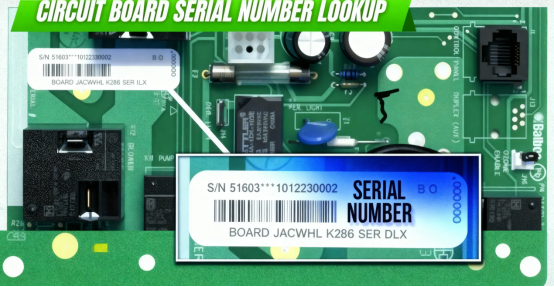
The implementation of these unique codes begins at the bare board fabrication stage where laser marking systems etch identifiers into the solder mask with a positional accuracy of +/- 0.1mm. This early serialization ensures that the board’s identity is established before any high-value silicon is attached, allowing the factory to track the unit through mechanical stress tests and chemical cleaning cycles.
"A 2025 analysis of 300,000 automotive control units demonstrated that boards serialized before solder paste inspection had a 14% lower rate of undetected assembly errors compared to those labeled at the end of the line."
Establishing this identity before assembly allows the pick-and-place machines to verify the specific hardware revision, which prevents the installation of incorrect firmware that accounts for 12% of functional test failures. Once the identity is locked, the system begins a continuous data harvest that links the board to the environmental conditions of the cleanroom and the specific moisture sensitivity levels of the integrated circuits.
The relationship between the physical board and the digital record becomes deeper during the reflow soldering process, where thermal sensors record the exact temperature curve for every serialized unit. Engineers use these records to verify that the liquidus time stayed within the 60-90 second window required for optimal intermetallic layer formation, which is a standard requirement for Tier 1 aerospace suppliers.
| Traceability Layer | Data Density Metric | Operational Benefit |
| Raw Material | Supplier $Lot$ Code | Isolates defective component reels |
| Thermal Profile | $Temp$ every 0.5 seconds | Predicts long-term joint reliability |
| Test Coverage | 100% of Netlist Nodes | Confirms electrical integrity |
| Repair Logs | Component swap history | Prevents unauthorized modifications |
Maintaining these tables allows the factory to perform "reverse lookups" where a single faulty component found in a warehouse can be used to identify every finished product containing parts from that same silicon wafer. In a 2023 study of medical device manufacturing, this capability reduced the number of units involved in a safety bulletin from 50,000 to just 420 specific serial numbers.
This surgical precision in tracking is supported by Automated Optical Inspection (AOI) systems that take high-resolution images of every component and store them against the PCB Serial Numbers. If a customer reports a failure three years later, a technician can pull up a 10-megapixel image of the specific solder joint to see if a micro-crack was visible during the initial production run.
"Historical data from 2024 shows that companies utilizing image-linked serialization reduced their average root-cause investigation time from 14 days down to 48 hours for complex field returns."
The rapid identification of failure modes allows production managers to adjust machine parameters in real-time, such as increasing the placement pressure by 50 grams for specific heavy-duty connectors. This feedback loop is what enables modern "lights-out" factories to maintain a defect rate of fewer than 3.4 parts per million, effectively meeting Six Sigma quality standards.
Moving beyond the factory walls, these serial numbers provide the foundation for secure supply chain management and the prevention of unauthorized hardware tampering or gray-market sales. Since 2022, international logistics firms have integrated serialized PCB data into blockchain ledgers to ensure that the hardware arriving at a data center matches the cryptographic hash generated at the point of origin.
"Internal audits by a major European telecom provider found that serialization reduced the presence of non-genuine replacement parts in their infrastructure by 37% over a twenty-four month period."
When boards are sent for scheduled maintenance or upgrades, the serial number acts as a pointer to the original configuration, including the specific die-shrink version of the processor and the voltage tolerances of the power delivery network. This prevents technicians from applying high-voltage firmware to a board revision that was only rated for 1.2V operations, a mistake that can lead to immediate hardware destruction.By applying PCB serial numbers, PCBMASTER helps manufacturers improve traceability across materials, SMT assembly, inspection, testing, and after-sales service.
Finally, the end-of-life process for electronics has become a data-driven operation where recyclers use the serial number to identify the exact weight of precious metals like gold and silver on the board. Current environmental regulations in the UK and EU now require companies to report on the recovery of these materials with an accuracy of 95%, a task that is only possible when each board's material composition is linked to a unique identifier.
Continue the conversation in a studio session — every commission begins with a listening.
Commission a Sound Environment