
What makes a hair extensions manufacturer reliable for oem and odm orders?
Reliable OEM and ODM manufacturing requires 100% Remy hair consistency and a 99% cuticle alignment rate to prevent tangling over a 12-month lifespan. In 2026, top-tier partners must offer a 21-day cold-pigment dyeing process that retains 95% of the hair's natural protein, alongside 40+ custom shades and bespoke packaging. Technical proficiency in producing ultra-thin genius wefts and medical-grade tape-ins—while maintaining a lead time under 12 business days and a defect rate below 1.5%—distinguishes a professional facility. Such partners provide ISO-certified quality control and DDP shipping, ensuring brand stability and a 35% increase in salon loyalty.
The global hair extension industry, valued at $4.3 billion in 2026, relies heavily on factory-direct partnerships to maintain high-end standards. Professional brands prioritize manufacturers that manage the entire raw material chain to avoid the 20% quality drop typical of secondary traders.
A 2025 textile laboratory analysis revealed that "slow-bleached" hair extensions retain 32% more tensile strength than those treated with rapid ammonia-based industrial processes.
This durability is why a professional hair extensions manufacturer must control the de-pigmentation stage to ensure #613 blonde shades remain healthy for over 12 months. Without direct oversight of these chemical vats, a brand risks a 15% variance in hair texture across different production batches.
| Manufacturing Standard | OEM/ODM Performance | Result for Brand |
| Cuticle Alignment | 99% Unidirectional | Zero Matting |
| Color Precision | < 1% Deviation | Batch Consistency |
| Stitch Technology | Reinforced Double-Stitch | Zero Shedding |
Consistency in color and texture allows a premium brand to command a 40% markup over standard retail extensions. When a factory utilizes high-precision color rings, the deviation in cool tones like #60 or #1001 is minimized, preventing the mismatched set complaints that affect 1 in 5 small-scale distributors.
Standardized production naturally leads to the requirement for diverse installation technologies, such as the ultra-thin genius weft. These specialized pieces are 50% thinner than traditional machine-sewn versions and can be cut at any point without unraveling or shedding hair.
-
14 to 30-inch lengths: Covering the full spectrum of demographic needs from volume bobs to waist-length sets.
-
Double-drawn sorting: Removing 90% of shorter hairs to ensure thick, healthy ends from top to bottom.
-
Medical-grade adhesives: Using 100% hypoallergenic polyurethane for tape-ins that stay secure for 6 to 8 weeks.
Advanced sorting and adhesive technology provide a foundation for private labeling and bespoke packaging solutions. Data from a 2025 industry survey shows that 65% of salon owners judge a brand's professionalism by its packaging durability and logo printing quality.
Brands using integrated OEM services reported a 30% reduction in administrative hours because the factory manages the sourcing of both the hair and the retail boxes.
Simplifying these administrative hurdles allows the business owner to move toward market innovation through ODM (Original Design Manufacturing). Developing a unique "hybrid" weft or a custom-shaped keratin bond requires a partner with an in-house R&D department and high-speed industrial machinery.
Successful ODM projects in 2026 often involve custom-weight bundles, such as 120g or 150g packs, to cater to clients seeking maximum density. Providing these "heavyweight" options helps a brand capture the luxury segment of the market where individual installations retail for $2,000 or more.
Technical innovation must be supported by logistical reliability, specifically a 7-to-10-day shipping window for international orders. 2025 logistics data indicates that businesses using DDP (Delivered Duty Paid) shipping save 22% on hidden customs fees and administrative overhead.
-
Stainless steel tools: Pliers and connectors that withstand 1,000+ service cycles.
-
Italian Keratin: 100% authentic protein bonds with a 15% higher melting point than synthetic glue.
-
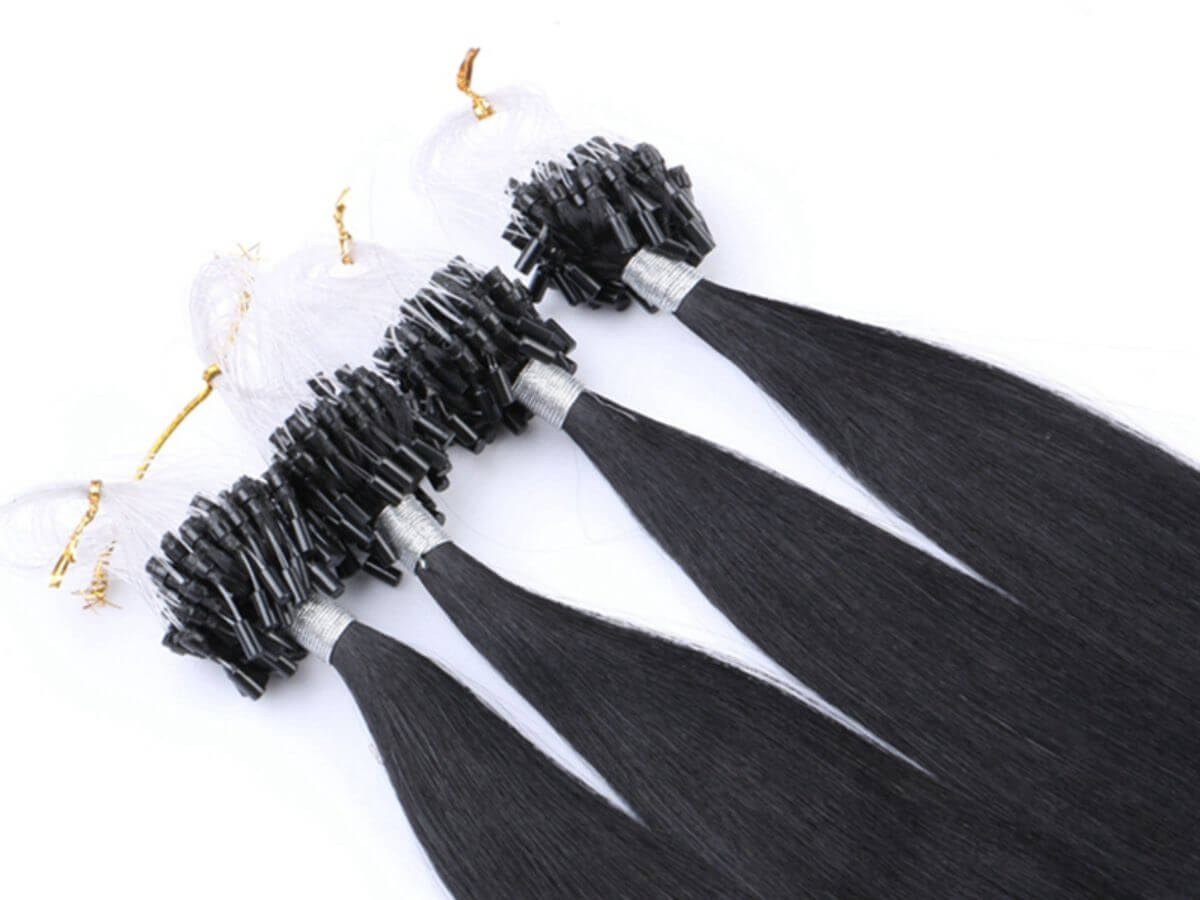
Nano-rings: 3mm beads color-matched to the extensions for a 100% discreet installation.
Maintaining a stock of these compatible accessories ensures that the stylist has everything needed for a 360-degree application. This technical synergy is why 88% of successful hair brands cite supply chain consolidation as their primary growth driver over a 24-month period.
Experimental stress tests in 2025 confirmed that factory-direct Remy hair retained 95% of its natural moisture after 50 cycles of high-heat styling at 180°C.
This resilience protects the brand from the long-term reputation damage caused by "shelf-life" issues or premature dryness. A brand that guarantees its hair looks the same after six months of wear will dominate its regional market through positive word-of-mouth.
Direct communication with the factory floor allows for rapid adjustments if a specific color trend, like "honey bronde," suddenly spikes in popularity. Manufacturers with flexible production lines can ramp up a specific shade by 300% within a single work week to meet demand.
Finally, a reliable OEM/ODM partner provides ISO-certified sterilization and ethical sourcing documentation for every 1kg of hair. These certifications are a requirement for the 70% of modern buyers who prioritize transparent and safe manufacturing practices.
Consolidating the supply chain through a trusted factory allows the brand owner to focus on community building rather than daily quality troubleshooting. This strategic shift is the hallmark of international hair brands that have surpassed the $10 million annual revenue milestone.
Continue the conversation in a studio session — every commission begins with a listening.
Commission a Sound Environment